Marketing
It’s Not the Funnel, It’s the Feeling: Understanding the Modern Customer Journey
TL;DR
Customer journey mapping isn’t a marketing buzzword. It’s the difference between knowing what you think people experience and understanding what they actually go through.
Customer journeys aren’t about charts or funnels. They’re about empathy and clarity.
- Customers don’t move in straight lines. They jump around.
- The experience is just as important as the product
- Emotion drives decisions more than data
- Fix small frustrations before chasing big ideas
Most businesses don’t really know. They see metrics and reports, but not the moment someone gets frustrated trying to find pricing. Or the hesitation before a form gets abandoned. Or the silence that follows a clunky follow-up email.
Journey mapping is how you find those moments and fix them.
Why This Matters Now
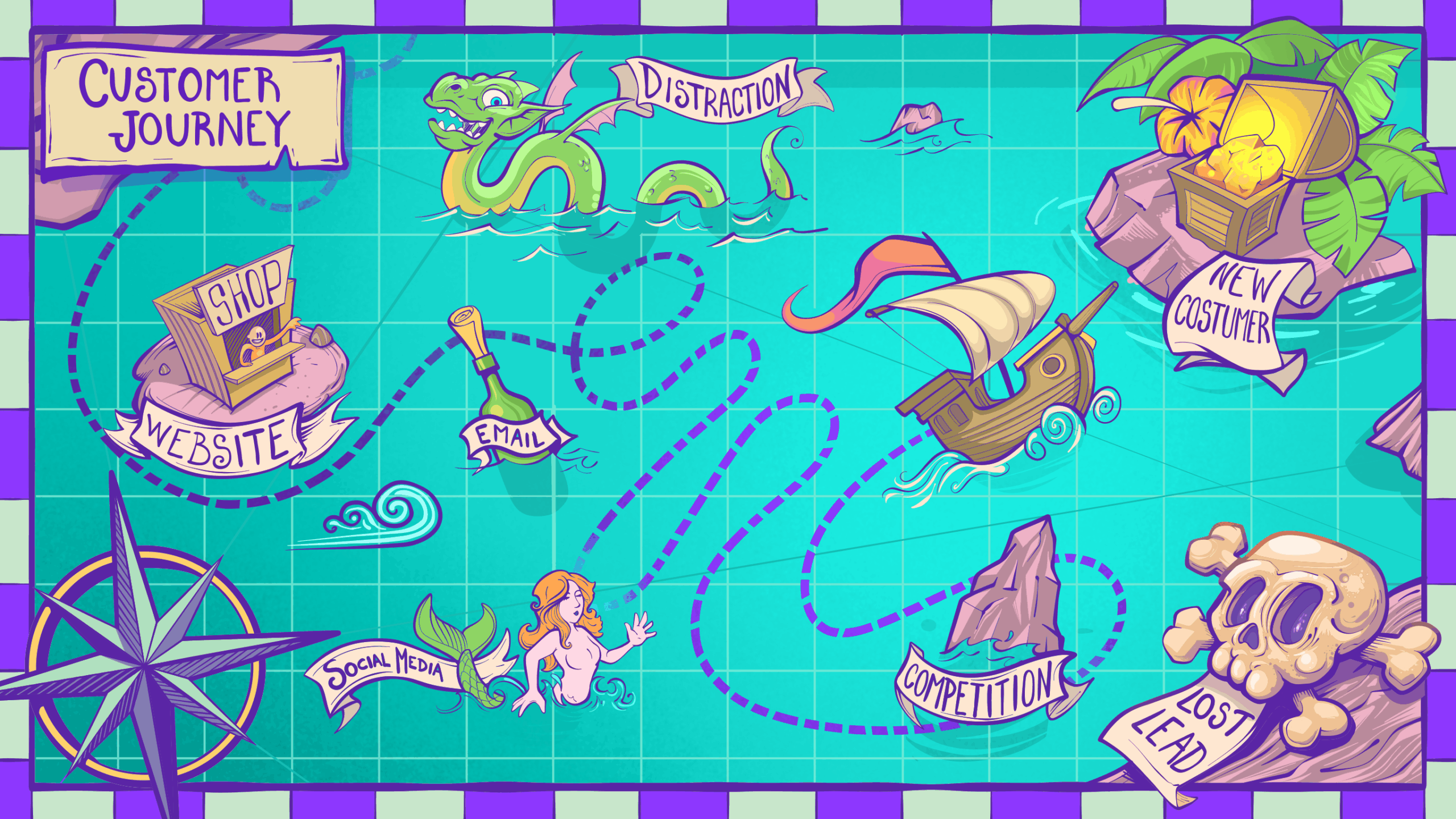
Customers don’t move in straight lines anymore. They see your ad, check your website, read reviews, talk to a friend, then disappear until something reminds them of you again.
If those touchpoints feel disconnected, you lose trust before you ever win the sale. But when the experience feels consistent, it builds momentum. People start to believe you understand them.
Research from Salesforce found that:
80% of customers consider the experience a company provides just as important as its products or services.
That’s the point. The experience is the product.
The Mistake Most Businesses Make
A lot of businesses try to fix conversion problems with more advertising, more offers, or more content. But customers may not leave because they aren’t seeing enough of you. They may leave because something in the process doesn’t feel right.
Maybe your emails sound robotic. Maybe you ask for too much information up front. Maybe your customer service tone doesn’t match the rest of your brand.
Before you launch another campaign, you need clarity, empathy, and consistency.
How to Get It Right
Start with three real customers. Forget fake personas with clever names. Think about the people you’ve actually worked with, the quick yes, the slow maybe, and the one that got away.
For each one, write down:
- How they found you
- What made them reach out
- What almost stopped them
- What convinced them to say yes
- What happened next
Look for the patterns. The same moments of confusion or hesitation. The same questions that keep coming up. Those are the gaps you can close.
Map the Emotion, Not the Steps
Every decision is emotional before it’s logical. People move from curiosity to doubt to confidence. Your job is to guide them through it.
- When they’re curious, be interesting.
- When they’re doubtful, be clear.
- When they’re ready, make it easy.
That’s not a funnel. That’s how trust feels in motion.
Fix the Friction
Before you launch something new, you can do an audit of your current materials to clean up what’s already in front of people.
- Is your product or service easy to find?
- Are your emails helpful or just reminders?
- Do customers get the same tone and experience whether they talk to sales, support, or see an ad?
You can’t build loyalty on a shaky experience. In the end, the small things can matter more than the big splash.
What Good Looks Like in 2025
The best organizations keep their customer data connected, use it to personalize interactions, and track where people drop off so they can fix it fast.
They develop creative that feels like a single story told in different places. They plan communication like a relationship, not a transaction. The result is more loyalty, less churn, and stronger word of mouth.
Where Ghost Comes In
We help businesses understand what their customers actually experience and turn that information into stronger connections.
That means building systems that track real behavior, creating touchpoints that feel human, and designing experiences that flow naturally from the first impression to the follow-up.
Understanding your customer isn’t a one-time project. It’s the foundation of everything that comes next. At Ghost, we can help you turn those insights into experiences that build trust and loyalty.