Oklahoma Contemporary Draws in Twice the Traffic With New Website
204%
Increase in Active Users in the First Four Months
175%
Increase in Total Engagement Events
688K
Page Views - a 160% Increase Over the Previous Period
Marketing
Design
Overview
Oklahoma Contemporary is an arts center built around the idea that art should be accessible to everyone. With free exhibitions, performances, and educational programming, the organization draws a wide range of visitors, students and community members.
As the organization continues to add events and programs, finding information was becoming harder than it needed to be, and managing the content behind the scenes was harder still. When engaged to develop a new site, our job was to fix both issues.
Live Site
oklahomacontemporary.org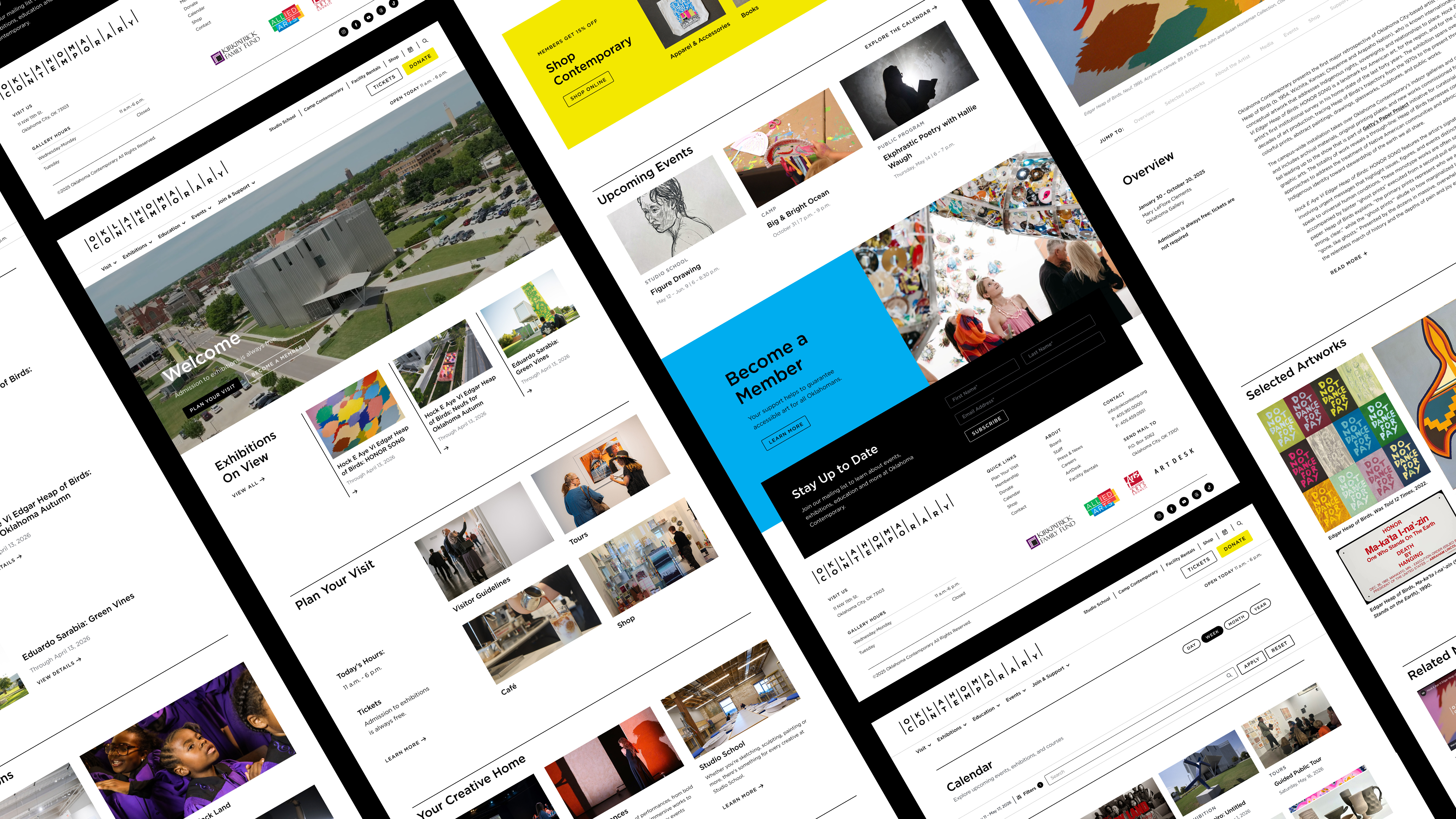
How We Helped
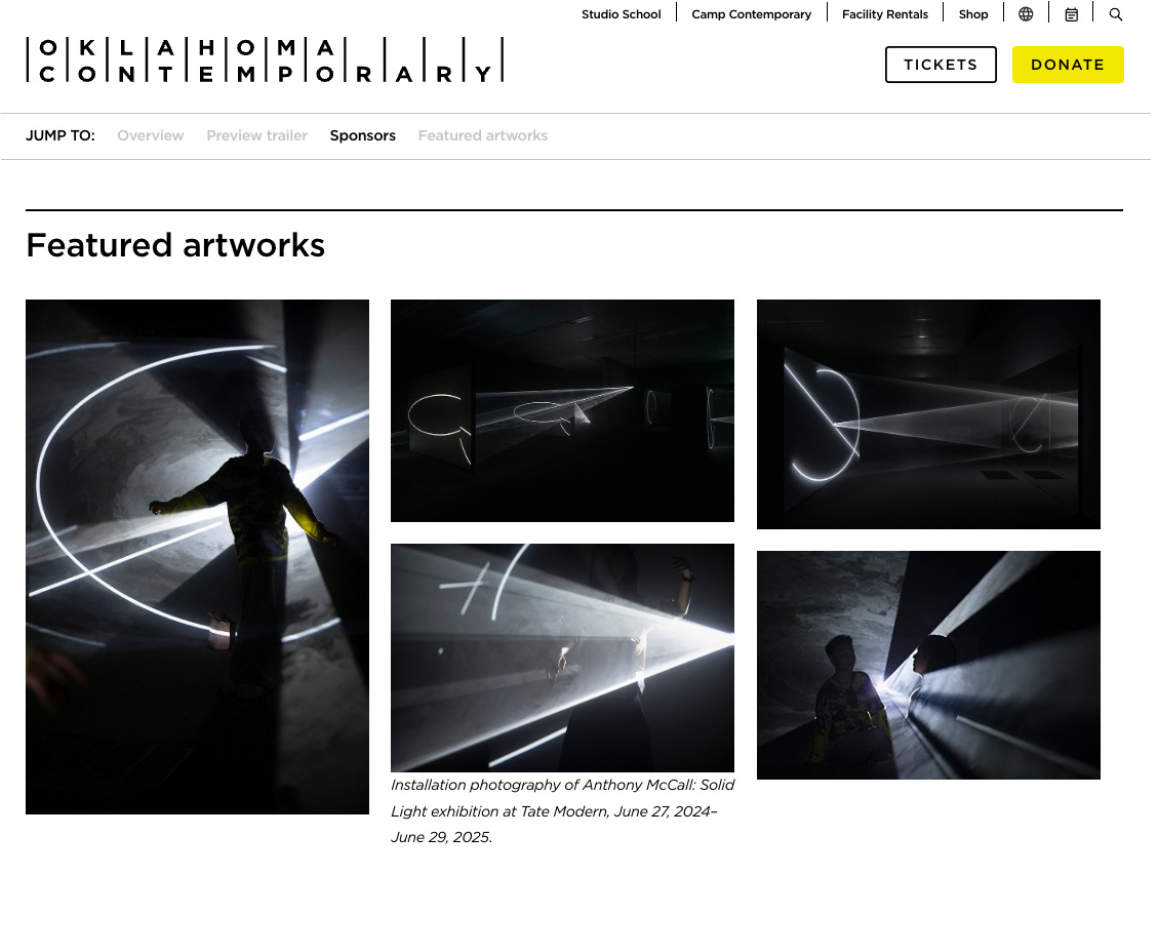
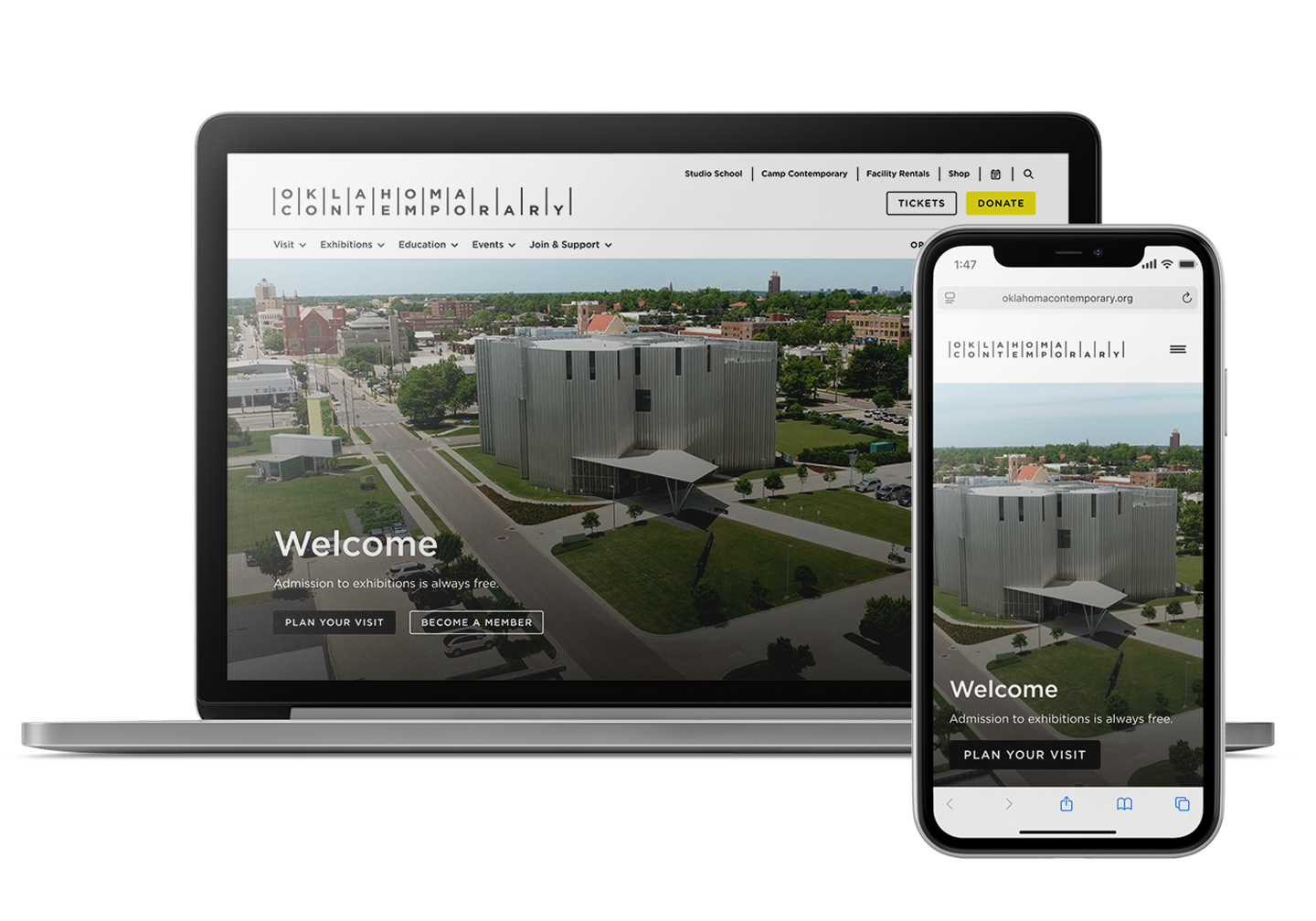
We designed and developed a fully custom, responsive website that keeps the focus where it belongs: on the art, the programming, and the people who come to see it. The visual approach is intentionally minimal, with modular content blocks that guide visitors toward what they’re looking for without getting in the way of the work on display.
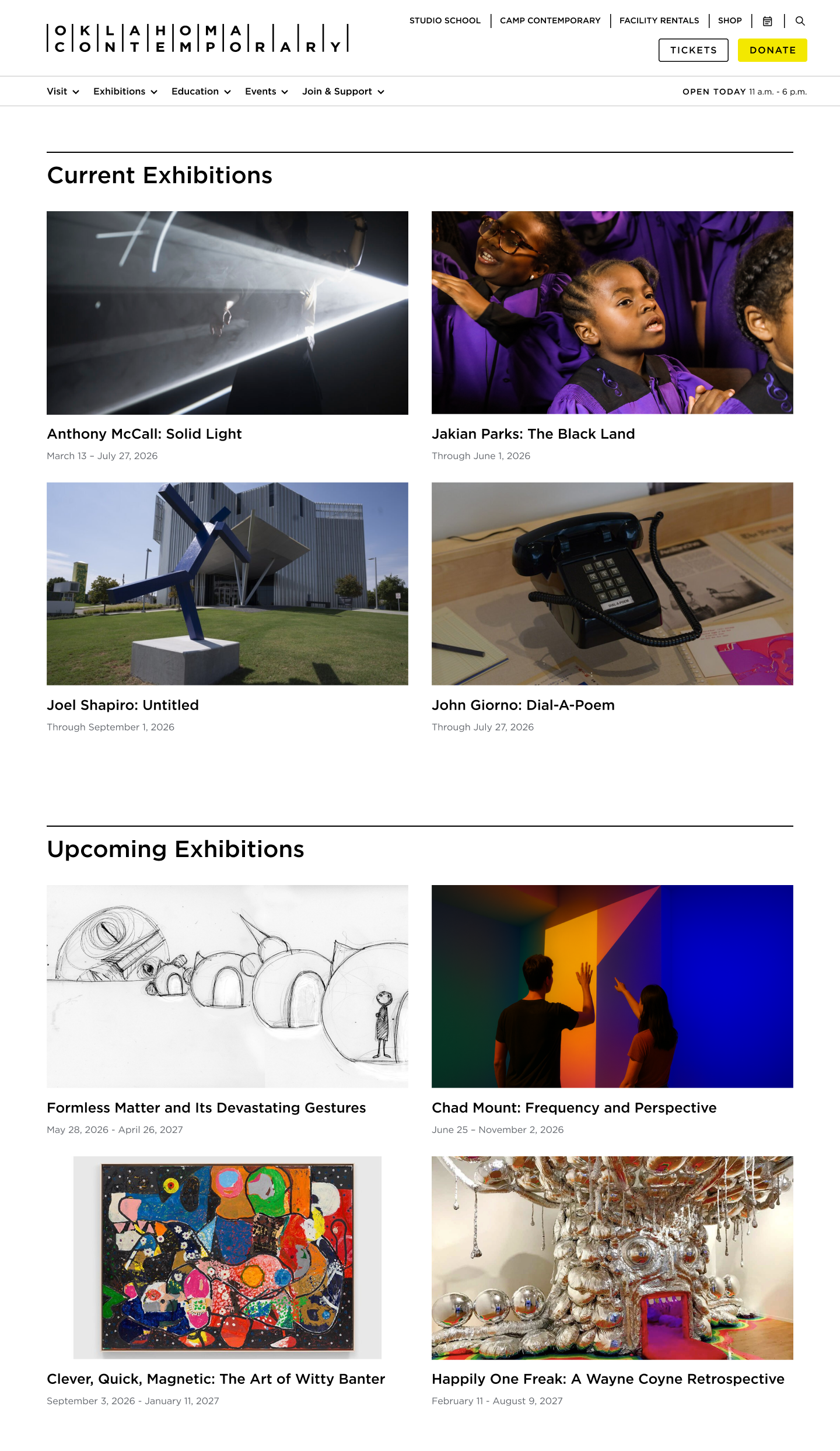
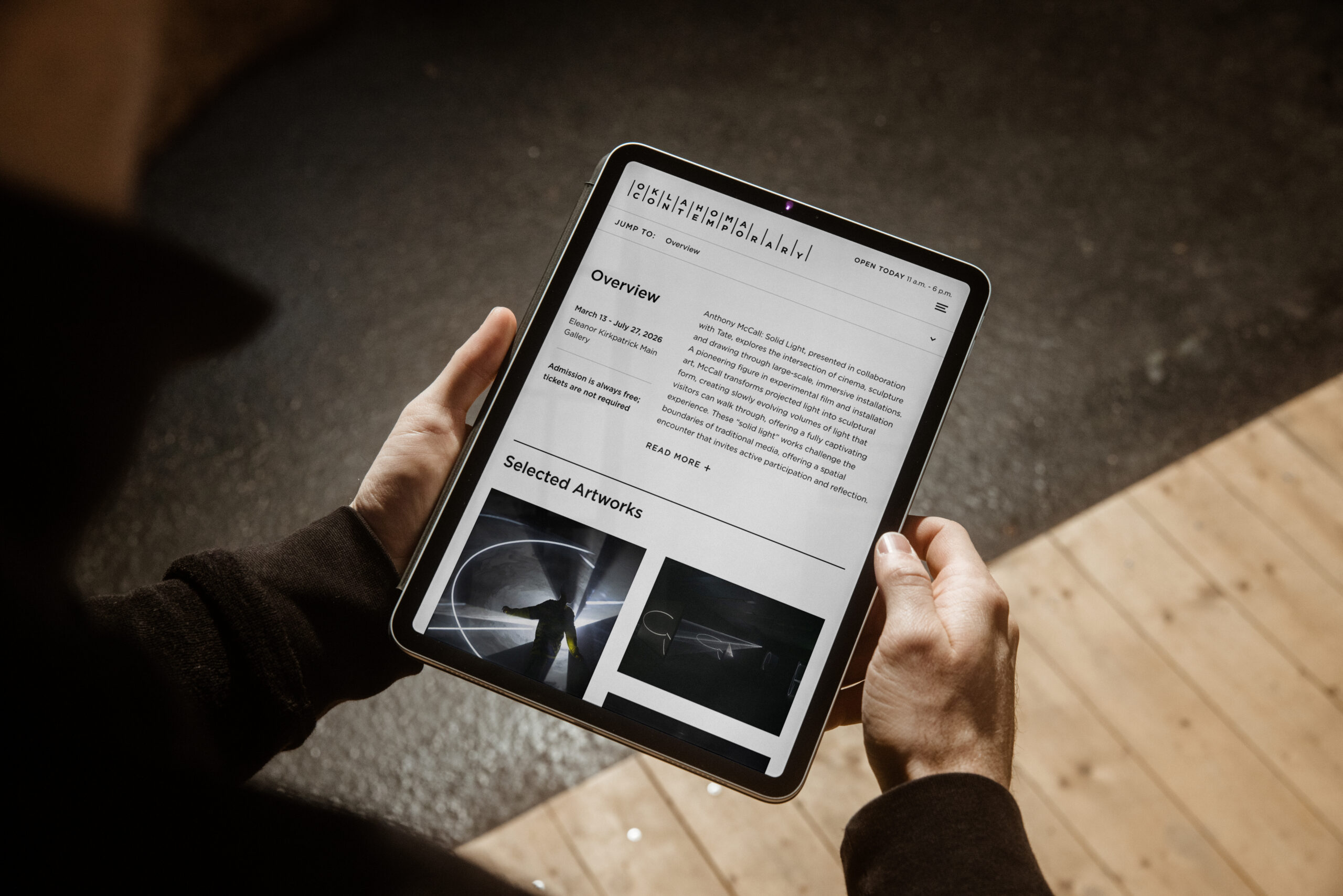
Navigation was rebuilt from the ground up. A sidebar menu was replaced with a top-level navigation bar and custom mega menus that organize content into clear pathways. Exhibition pages flex with the work they’re presenting. Tab-based navigation moves visitors between artworks, artist information, and a shoppable collection tied to Oklahoma Contemporary’s e-commerce store.
Navigation was rebuilt from the ground up. A sidebar menu was replaced with a top-level navigation bar and custom mega menus that organize content into clear pathways. Exhibition pages flex with the work they’re presenting. Tab-based navigation moves visitors between artworks, artist information, and a shoppable collection tied to Oklahoma Contemporary’s e-commerce store.
How We Helped
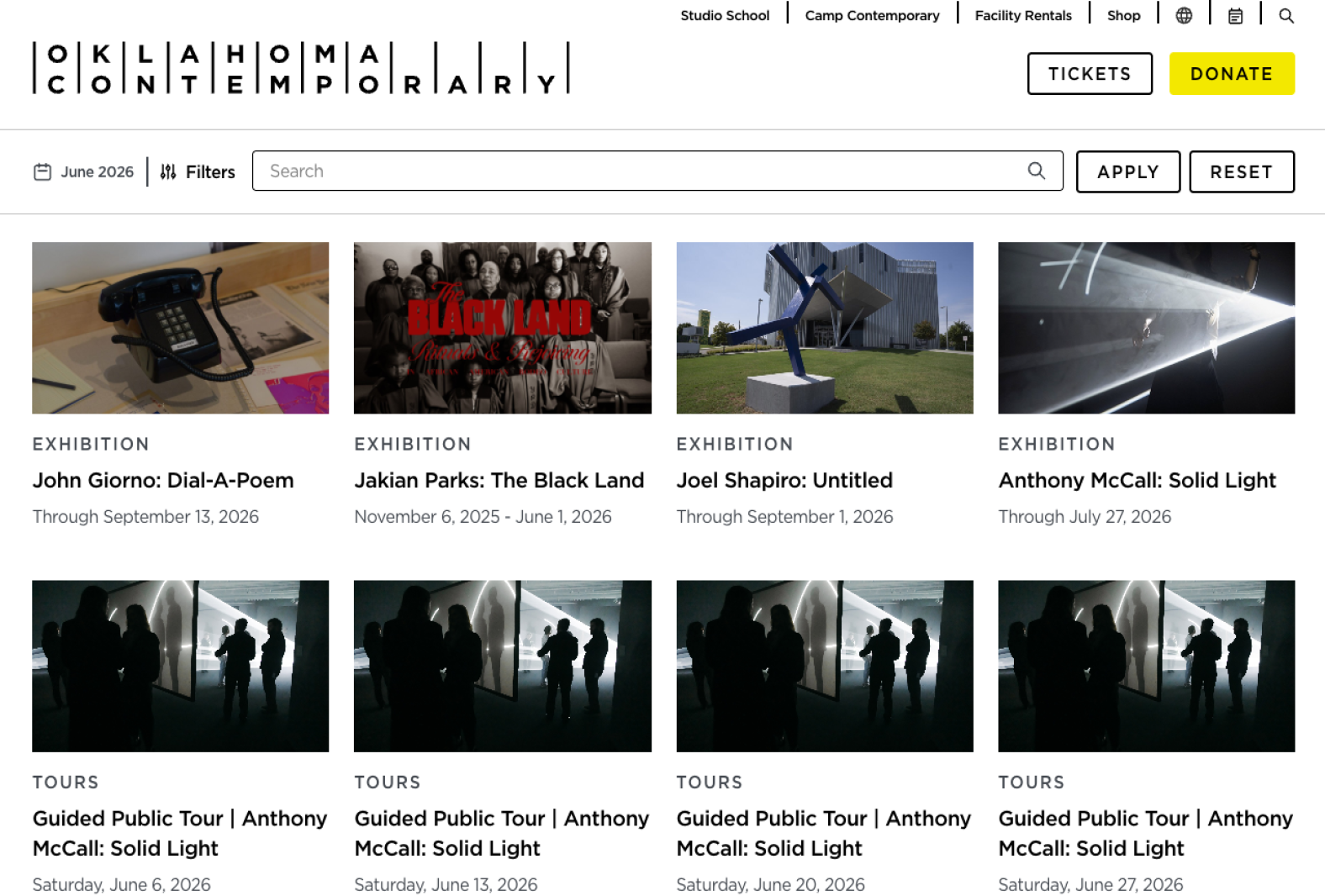
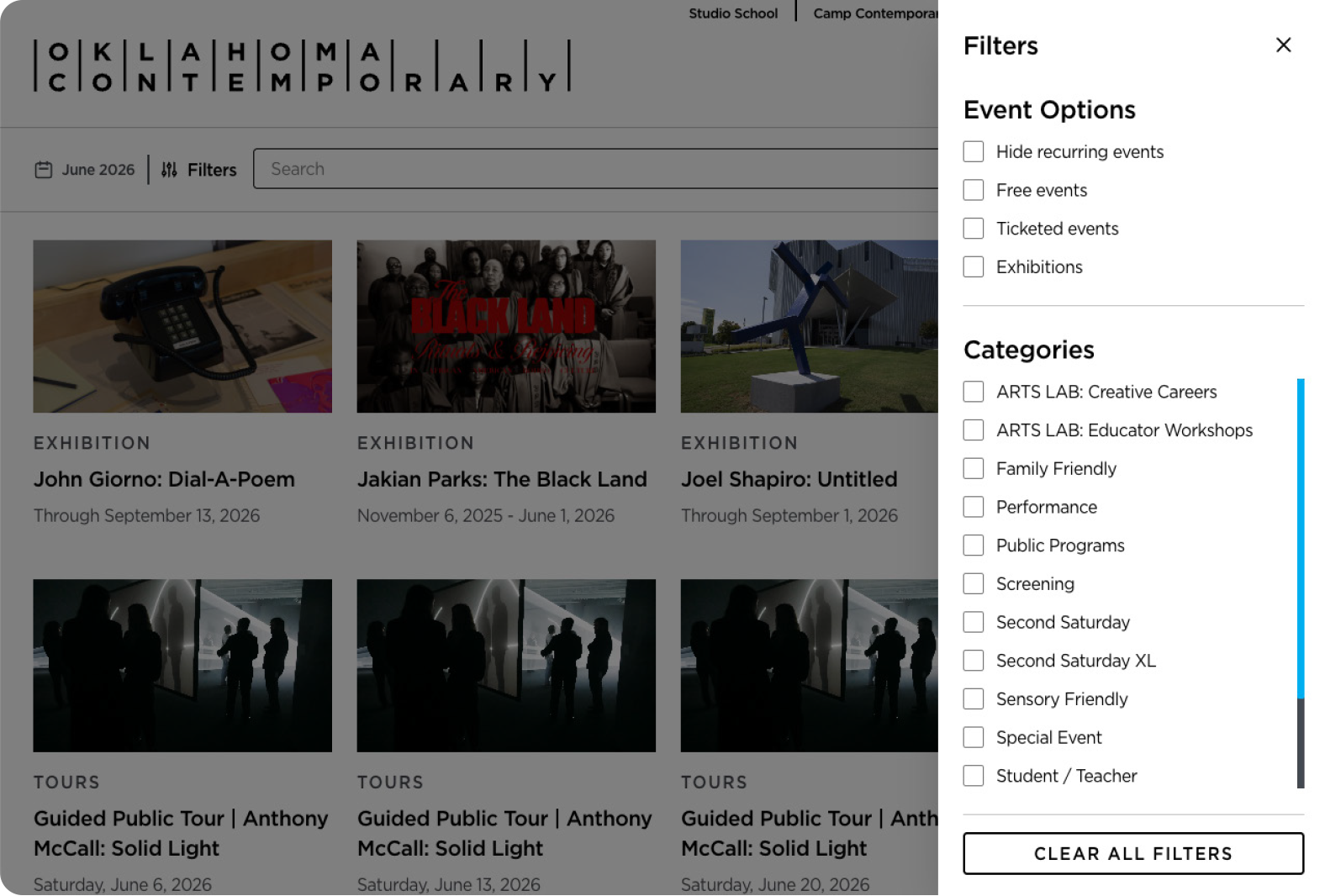
Improving the calendar and event registration system was a top priority. Now, users can filter by category, browse by day, week, month, or year, and refine results by free, ticketed, or recurring events. That filtering matters: without it, ongoing exhibitions and classes would bury single-session programming. With the new site, everything surfaces the way it should, and visitors can register without friction.
Behind the scenes, we built a content relationship model that connects exhibitions, classes, and events so they populate dynamically across the site. Previously, editors had to enter the same information several times, in multiple places. No more. The result is a better-connected platform that’s easier to manage and built to scale with the organization.
Behind the scenes, we built a content relationship model that connects exhibitions, classes, and events so they populate dynamically across the site. Previously, editors had to enter the same information several times, in multiple places. No more. The result is a better-connected platform that’s easier to manage and built to scale with the organization.