Marketing
Marketing: The Winning Game Plan
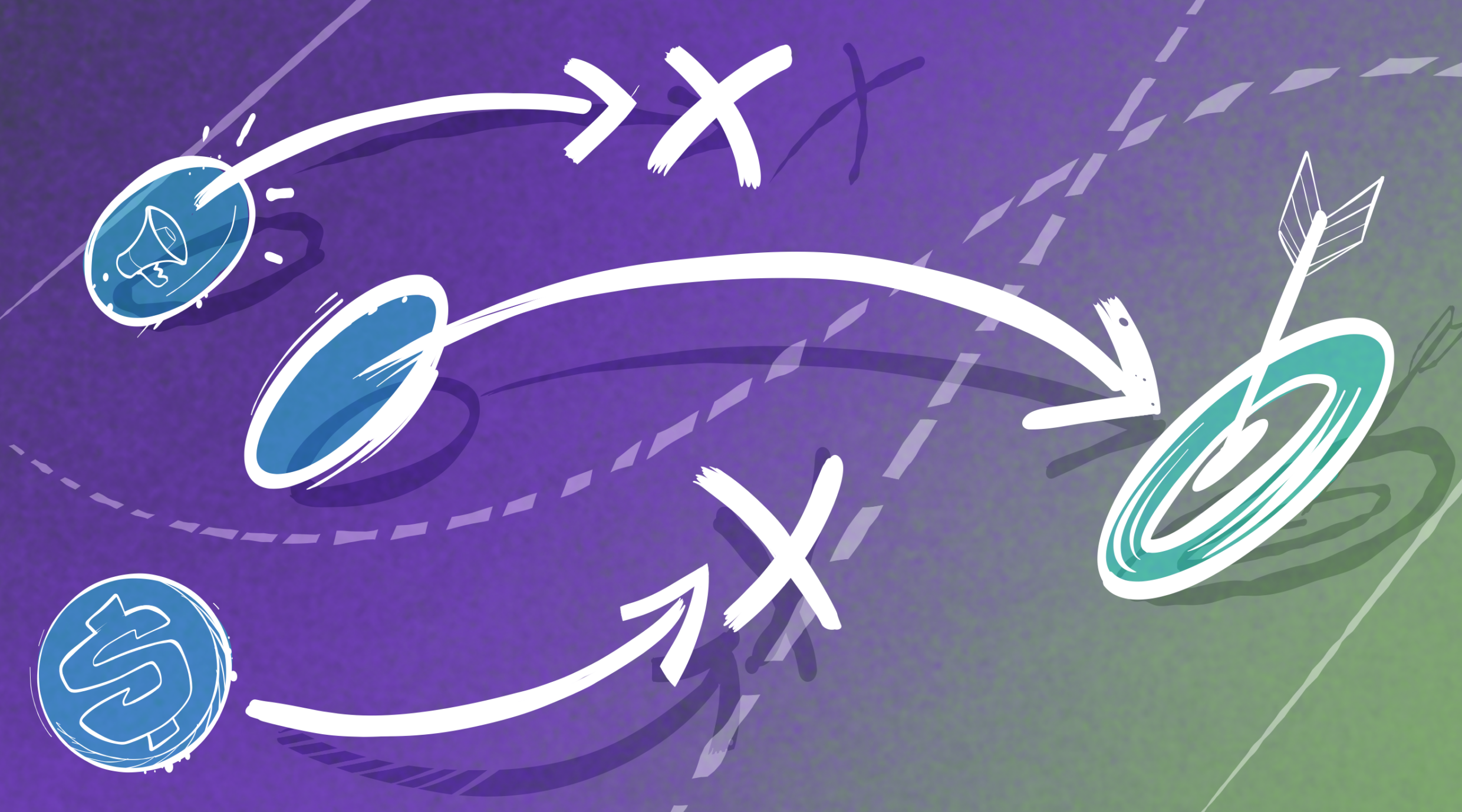
TL;DR
A marketing strategy and plan are the decisions you make to achieve your objective. It’s an evaluation of where your effort and budget should go before any tactics are chosen. Skip it, and you risk wasting money on activities that don’t add up.
- Strategy is the why and what, the plan is when and where; tactics are the execution. Get the order right.
- Define objectives, audience, and positioning before you spend a dollar.
- Measure against real KPIs and refine. A strategy is built to learn.
- Most plans fail from no strategy, not bad tactics.
Marketing plans can fail before anyone runs a single ad. Not because the tactics were wrong, but because nobody stopped long enough to figure out what they were actually trying to accomplish. This guide is about fixing that. Whether you’re building a strategy from scratch or trying to figure out why the current one isn’t working, here’s how to think through it clearly, step by step.
What Is a Marketing Strategy?
A marketing strategy is the set of decisions that determines how your business will reach the right people, communicate the right things, and move them toward the right action. It’s upstream of every campaign, every post, every ad buy. It’s the answer to “why are we doing this” before anyone asks “what should we make.”
That distinction matters more than people give it credit for. Tactics are cheap and plentiful. Strategy is the thing that makes tactics worth running. Without it, you’re just producing content and hoping something sticks. With it, every execution decision has a reason behind it, and that reason connects back to a business outcome someone actually cares about.
A real marketing strategy defines your objectives, names your audience specifically, positions your brand relative to alternatives, and maps out how you’ll reach people across the channels that matter to them. It’s a document you can make decisions against, not a mood board or a mission statement.
Why Marketing Strategy Matters
Here’s the honest version: most businesses don’t have a marketing strategy. They have a collection of marketing activities. Social posts go out because it’s Tuesday. Ads run because a competitor is running ads. A blog exists because someone read that content marketing was important in 2019.
The cost of that approach is real, even when it’s invisible. You spend money on execution that doesn’t compound. You can’t tell what’s working because nothing was designed to be measured against a clear goal. And when results disappoint, nobody knows whether to change the message, the channel, the audience, or the offer, because those things were never defined precisely enough to diagnose.
A documented strategy changes the math. It creates alignment across your team so everyone is pulling in the same direction. It makes budget decisions easier because you have criteria. It shortens the feedback loop because you know what you were trying to do, so you can tell whether you did it. The competitive advantage isn’t some secret tactic your competitors don’t know about. It’s just the discipline of deciding clearly before acting.
Key Components of an Effective Marketing Strategy
These are the non-negotiables. You can adapt the format, but you can’t skip the substance.
- Clear business objectives: What does the business need marketing to accomplish? Revenue targets, lead volume, market share, brand awareness in a new segment. Specific, measurable, and tied to something the business actually tracks.
- A defined audience: Not “small business owners” or “women 25-54.” Who specifically, with what specific problem, at what specific moment. The narrower you go here, the more useful every downstream decision becomes.
- Market and competitive research: What do your best customers actually value? How do competitors position themselves, and where are the gaps? What does the category conversation look like, and where is your brand’s credible place in it?
- Brand positioning: The short version of why someone should choose you over the alternatives, written in plain language. If you can’t say it in two sentences, it isn’t sharp enough yet.
- Channel strategy: Where your audience actually spends attention, not where it’s easiest to post. Reach them there, with the right message format for that context.
- Budget and resource allocation: What you’ll spend, where, and why. Including what you’re choosing not to do, which is often the harder and more important decision.
- Measurement framework: The KPIs that map to your objectives, not just the metrics your tools default to showing you.
Types of Marketing Strategies
There’s no single right type. The right answer depends on your audience, your category, and your stage of growth. Here’s a plain-language breakdown of the major approaches.
- Brand strategy: The foundation. Defines who you are, what you stand for, how you sound, and how you look across every touchpoint. Everything else sits on top of this. If it’s weak, everything built on it wobbles.
- Content marketing: Building an audience through useful, relevant content over time. Slower to show results, but compounds well. Works best when the audience has real questions and you have real expertise.
- SEO: Showing up when people are actively searching for what you offer. High intent, high value, requires patience and consistency. Still one of the best long-term investments a business can make in its marketing infrastructure.
- Paid media: Search, social, display, video. Fast to launch, fast to learn, requires ongoing investment to sustain. Best used to amplify something that already works organically, or to test messaging before committing to it at scale.
- Social media marketing: Building presence and community on the platforms where your audience already lives. Organic reach has compressed on most platforms, so this usually works in combination with paid, not instead of it.
- Omnichannel marketing: Coordinating the experience across every channel so the message is consistent and the customer journey feels intentional rather than fragmented. More complex to execute, but the standard your audience increasingly expects.
- Video marketing: The format with the most range right now, from short-form social content to long-form brand storytelling. Harder to fake, which makes it one of the best trust-building tools available.
Most strategies use several of these in combination. The question is which combination makes sense for your specific situation, not which ones are trending.
Step-by-Step Guide to Building Your Marketing Strategy
Seven steps. No filler.
Step 1: Start with the Business Problem
Before you touch marketing, get clear on what the business actually needs. Growth in a new market? Retention of existing customers? Awareness in a category where you’re unknown? The marketing strategy should be a direct response to a business problem, not a standalone exercise. If you skip this step, you’ll build something technically competent that solves the wrong thing.
Step 2: Research Your Audience Honestly
Talk to customers. Read their reviews. Look at what they search for, what questions they ask, what language they use to describe their own problems. Assumptions about your audience are the most expensive thing in marketing because they compound into every decision downstream. Spend more time here than feels comfortable.
Step 3: Audit What You Already Have
What’s working, what isn’t, and what’s just running on inertia. Look at your current channels, content, campaigns, and brand presence with honest eyes. Most businesses have more useful data than they’re using and more underperforming activity than they’re willing to cut.
Step 4: Define Your Positioning
Where does your brand sit in the market, and why should someone choose you? This is the hardest step and the most skipped. Good positioning is specific, credible, and differentiated. It makes some people say “that’s exactly what I need” and others say “that’s not for me.” Both reactions are correct. Positioning that tries to appeal to everyone communicates nothing to anyone.
Step 5: Set Objectives and KPIs
Specific goals tied to business outcomes, with metrics that actually measure whether you hit them. “Increase brand awareness” is not a goal. “Generate 200 qualified leads per month from organic search by Q3” is a goal. The difference is that one can be measured and one can only be felt.
Step 6: Build the Channel and Content Plan
Now, finally, you get to decide what to make and where to run it. Channel selection should follow audience behavior, not convenience. Content should serve the positioning you defined, not just fill a calendar. Every piece of execution should have a clear job to do.
Step 7: Build in Measurement and Iteration
Set a cadence for reviewing performance against your KPIs. Monthly at minimum, weekly if you’re running paid media. Build the expectation that the strategy will evolve as you learn. A strategy that never changes isn’t disciplined, it’s just stuck.
Common Marketing Strategy Mistakes to Avoid
- Skipping discovery: Jumping to tactics before understanding the real problem. The symptom you can see is rarely the thing worth solving.
- Vague audience definitions: “Everyone” is not an audience. The more specifically you can describe who you’re talking to, the more effective every message becomes.
- Confusing activity with progress: Posting consistently, running ads, sending emails. None of that means anything if it isn’t connected to a measurable outcome you care about.
- Measuring the wrong things: Optimizing for impressions when you need leads. Celebrating follower growth when you need revenue. Your metrics should map to your objectives, not to what’s easy to report.
- Treating branding as decoration: Your logo is the least interesting part of your brand. The system underneath it, your voice, your positioning, your visual language, your customer experience, that’s what actually shapes how people perceive you. Agencies that open with logo options before asking hard questions about your business are skipping the part that matters.
- No alignment before execution: Building campaigns before key stakeholders agree on direction. This is how you end up redoing work that was never wrong creatively, just never approved strategically.
- Chasing trends instead of building systems: The format that’s working on social right now will be different in six months. The audience insight you developed through real research will still be true. Build on the thing that lasts.
Implementation and Measurement
A strategy document that lives in a shared drive and never gets acted on is just a long way to waste time. Implementation is where most strategies actually fail, not in the thinking, but in the handoff from plan to execution.
A few things that make implementation work in practice:
- Assign ownership: Every initiative needs a person responsible for it. Shared responsibility is usually no responsibility.
- Build a realistic timeline: Sequence your priorities. What has to happen before something else can happen? What can run in parallel? A launch calendar with dependencies mapped out is worth more than a list of goals.
- Choose tools that serve the strategy: CRM, analytics, project management, ad platforms. Pick what you actually need for the strategy you’re running, not the most feature-rich option available. Complexity is a cost.
- Set a measurement cadence: Weekly check-ins on active campaigns. Monthly reviews of KPI progress. Quarterly strategy reviews to assess whether the bigger picture is still right. Each of these has a different scope and a different set of questions.
On KPIs: the ones worth tracking are the ones tied directly to your objectives. For most businesses, that means some combination of lead volume, conversion rate, customer acquisition cost, lifetime value, and organic search performance. The specific mix depends on your model. What matters is that you’ve decided in advance what success looks like, so you’re not reverse-engineering a narrative from whatever numbers happen to look good.
Frequently Asked Questions
What’s the difference between a marketing strategy and a marketing plan?
Marketing strategy is the why and the what: your objectives, your audience, your positioning, your channel priorities. A marketing plan is the how and the when: the specific campaigns, content, timelines, and budgets that execute the strategy. You need both, but strategy comes first. A detailed plan built on a weak strategy is just organized busywork.
How long does it take to build a marketing strategy?
Depends on the complexity of your business and how much discovery work needs to happen. A focused strategy for a single product or service can come together in a few weeks. A full brand and marketing strategy for a mid-market company with multiple audiences and channels is more likely a six-to-eight week process. Rushing it costs more later than taking the time costs now.
How much should we budget for marketing?
The honest answer is that it depends on your growth stage, your category, and what you’re trying to accomplish. A common benchmark is 5 to 10% of annual revenue for established businesses, higher for companies in aggressive growth mode. More important than the percentage is allocating it against a strategy rather than spreading it evenly across everything. You get what you pay for, and underfunded strategies tend to underdeliver in ways that get blamed on the strategy rather than the budget.
What’s the most important part of a marketing strategy?
Audience definition and positioning, and they’re connected. If you know exactly who you’re talking to and you have a clear, credible reason why they should choose you, almost every other decision gets easier. Most strategies that fail do so because one or both of those things were fuzzy from the start.
How do we know if our marketing strategy is working?
You defined KPIs tied to specific objectives before you launched. You’re reviewing them on a set cadence. You’re seeing movement in the metrics that map to the outcomes you said you needed. If you can’t answer those three things, the measurement framework wasn’t built into the strategy, and that’s the thing to fix first.
Should we handle marketing strategy in-house or hire an agency?
Both can work. In-house teams have context and continuity. A good agency brings outside perspective, specialized expertise, and a process designed to surface things internal teams are too close to see. The wrong answer is hiring an agency that skips strategy and goes straight to production. If an agency’s first question is about deliverables rather than business objectives, that tells you something important about how they work.
How often should we update our marketing strategy?
Review it quarterly. Update it when something meaningful changes: your competitive landscape shifts, you enter a new market, your audience behavior changes, or the data tells you something you didn’t expect. A strategy isn’t a document you write once and file. It’s a living framework that should get sharper as you learn more.
What’s the biggest mistake companies make with marketing strategy?
Treating it as a marketing department problem rather than a business problem. Marketing strategy that isn’t connected to business objectives, sales reality, and product truth is just creative work in search of a purpose. The best marketing strategies are built with input from across the business, not handed down from a single team.
Do small businesses need a formal marketing strategy?
Yes, probably more than large ones. Big companies can absorb wasted spend. Small businesses can’t. A clear strategy is what lets a small team punch above its weight, because every dollar and every hour is going toward something with a defined purpose instead of scattered across whatever seemed urgent that week.
What does Ghost’s process look like for building a marketing strategy?
It starts with discovery, always. Before Ghost recommends anything, the work is to understand what’s actually going on: the business, the audience, the competitive landscape, and what the client has already tried. From there, strategy gets defined and locked before execution starts. The goal is that by the time anyone is producing creative or launching campaigns, every decision has a reason behind it that connects back to something the business actually needs. If that sounds like more upfront work than you’re used to, it is. It also tends to mean fewer surprises, less rework, and work that holds up over time.